
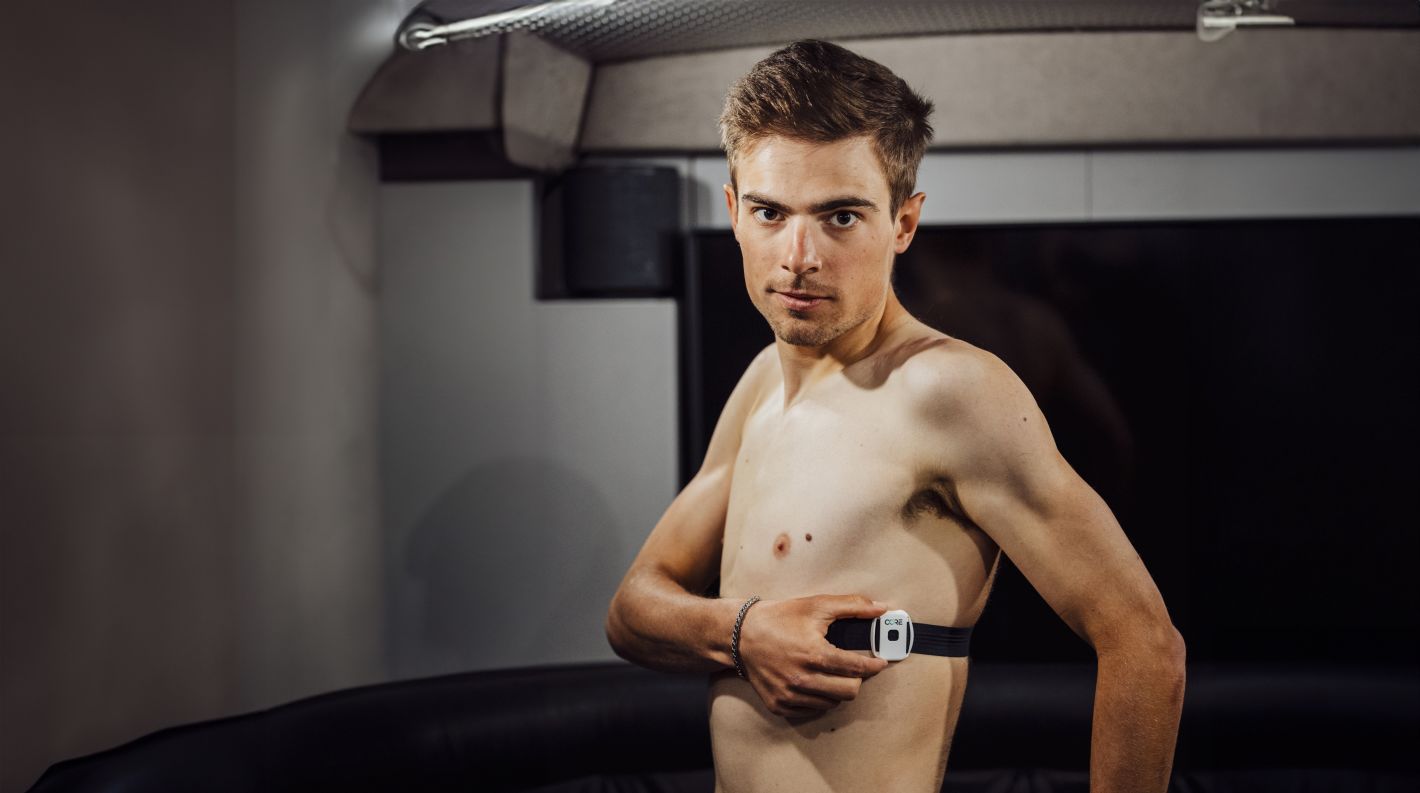
Wim De Wolf, one of the team’s coaches, explained how we rely on the CORE devices throughout the season.
Racing in warmer conditions brings a challenge that goes beyond tactics or power numbers: heat. With high temperatures a constant factor at the AlUla Tour, Soudal Quick-Step has placed a strong emphasis on heat adaptation as part of its early-season preparation — using core body temperature data to guide training in a precise and individualised way.
“Heat has a clear negative effect on performance if you’re not prepared for it”, explains Wim De Wolf, one of the team’s coaches. “That’s why adaptation has to happen before we travel. You can’t wait until you arrive in Saudi Arabia and hope the body adjusts in time.”
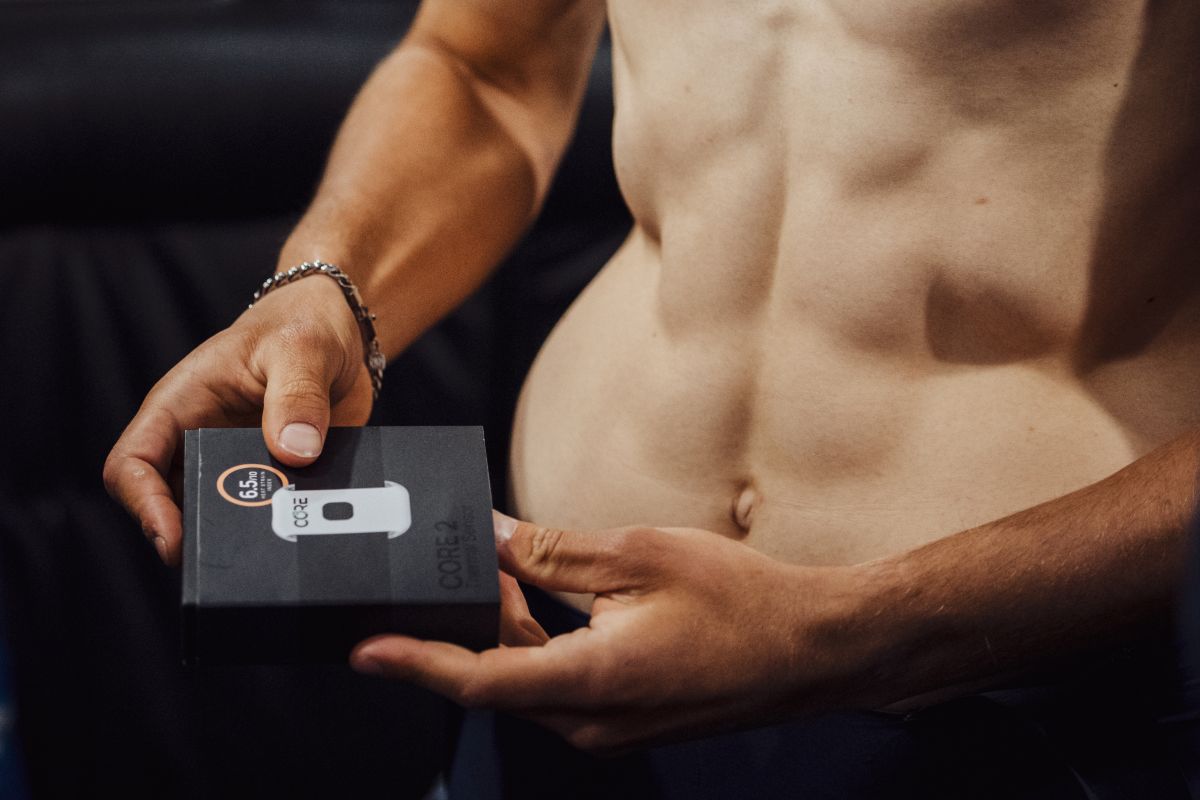
To prepare riders for racing in hot conditions, the team relies on active heat training, monitored using CORE sensors. Several times per week, riders complete dedicated heat sessions of around 45 minutes, training within a specific temperature zone designed to stimulate adaptation.
The CORE device allows us to monitor exactly how a rider’s body responds during these sessions.
“We can see when they enter their heat zone, how stable they are within it, and how they recover afterwards. That means the sessions are controlled and effective, rather than just uncomfortable.”
To reach the target temperature more efficiently, riders are overdressed, sometimes wearing a CORE heat suit. The aim is not to increase workload, but to elevate core temperature more quickly so the rider can spend more time in the adaptation zone.
“The CORE suit helps us get to the right temperature as soon as possible,” De Wolf explains. “That way, the session is shorter, more focused, and doesn’t interfere with the rest of the training program.”
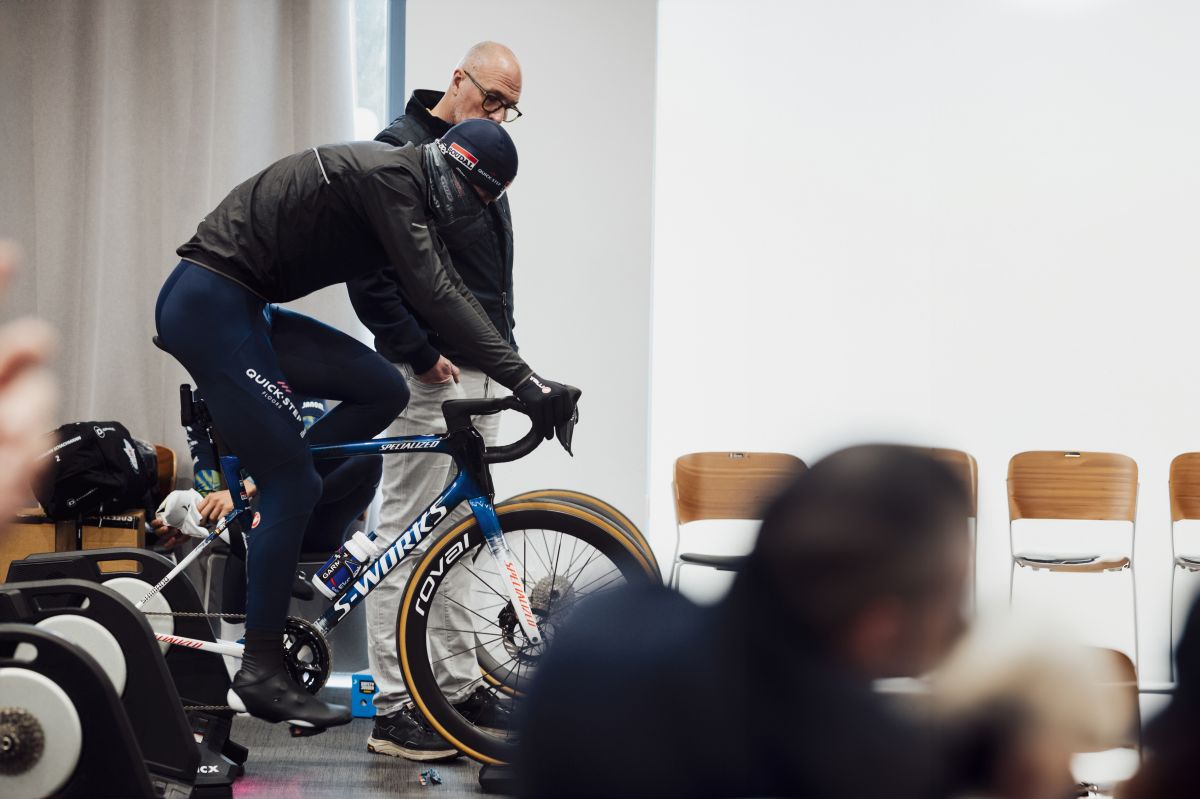
Riders also wear the CORE sensor during regular training and racing, building awareness of how their body temperature changes in different situations. This data plays a key role in refining individual cooling strategies. “Not every rider reacts to heat in the same way”, says De Wolf. “By using the data, we can identify what works best for each rider — whether that’s hydration timing, cooling methods, or pacing decisions. CORE helps us make those choices based on evidence, not guesswork.”
One of the riders benefiting from this approach is Martin Svrček, who will be part of the team’s squad at the AlUla Tour. Like many young riders, adapting to extreme heat is a crucial step in his development. “For Martin and others in the squad, this preparation removes uncertainty”, De Wolf concludes. “When we arrive at the race, the heat isn’t a surprise. The riders know how their bodies respond, and we know how to support them. That allows everyone to focus on racing — which is the whole point.”
Photo credit: ©Wout Beel